PEO4YOU

Author: Sam Newland

  • PEO Health Benefits for Small Businesses: A Comprehensive Guide

    PEO Health Benefits for Small Businesses: A Comprehensive Guide

    What Does PEO Stand For?

    Getting a Grasp of What a PEO Entails

    Small businesses up to 100 employees (5-50 employees tends to be the sweet spot) can benefit from working with a Professional Employer Organization (PEO), which offers a range of HR services such as managing payroll and tax filings, along with ensuring compliance and providing group health insurance and benefits coverage for employees. By teaming up with a PEO as an employer partner, small businesses can access cost-effective health insurance options that are typically more difficult to secure without such collaboration.

    Understanding PEO Health Plans for Employees

    When your company partners with a Professional Employer Organization (PEO), your employees gain access to healthcare benefits that might typically be out of reach for smaller businesses. But how does this work? Let’s break it down.

    Collaborative Advantage

    A PEO extends the concept of co-employment, which means it merges your employees with those from other businesses into one large employee pool. This collective group allows the PEO to negotiate better rates and benefits with insurance providers.

    Benefits to Employees

    1. Access to Premium Plans: With a large group acting as one entity, insurance providers can offer high-quality health plans at a rate smaller providers can’t typically secure.
    2. Economies of Scale: Because of the pooled risk among many employees, the cost of insurance is spread out, resulting in more affordable premiums for high-tier plans.
    3. Risk Mitigation: The large pool buffers any single employee’s claims, which can lead to more stable rates over time.

    Financial Feasibility

    These competitive rates and robust benefit options often directly translate to significant savings for both employers and employees. Smaller companies can offer attractive health benefits without the prohibitive costs usually associated with top-tier plans.

    By joining forces with a PEO, your employees not only receive valuable health coverage but also enjoy the same advantages typically reserved for larger corporations.

    The Importance of PEO Health Insurance for Small Businesses

    Health insurance offered by PEOs is incredibly beneficial for small businesses facing challenges in offering top-notch health coverage because of high premiums. PEOs negotiate with health insurers to secure better rates by combining employees from client companies under their umbrella. This approach leads to lower costs and improved coverage options for all involved. As a result of this arrangement, even small businesses with a small number of employees can provide their workforce with comprehensive health insurance packages. In a competitive job market, providing such perks can enhance your company’s appeal to highly skilled professionals.

    Advantages of PEO Health Insurance

    Efficiency in Cutting Costs: The Strength of Collective Purchasing

    One major benefit of PEO health insurance is the savings on costs it offers by using the combined purchasing power of all its clients to negotiate rates for group health coverage and ancillary benefits, resulting in more budget-friendly rates for employees than what small businesses could secure independently. For instance, a study conducted by the National Association of Professional Employer Organizations (NAPEO) revealed that companies utilizing PEO services save an average of 35% on healthcare expenses.

    Access to Comprehensive Health Insurance Plans

    Professional Employer Organizations (PEOs) provide a range of health insurance options, such as coverage for vision care services that often come with broader networks and enhanced benefits than what small businesses can typically obtain on their own. Collaborating with a PEO enables businesses to offer comprehensive health insurance plans that encompass healthcare services, wellness initiatives, and the opportunity to connect with top-notch healthcare providers.

    Efficient Administration and Assistance with Regulatory Compliance

    Providing health insurance involves plenty of paperwork tasks like overseeing employee enrollments and ensuring adherence to healthcare regulations. PEO services cover all the duties related to providing health insurance. This helps small business owners save time and stay compliant with laws like the Affordable Care Act (ACA) and new state regulations such as required employees trainings, minimizing the chances of facing penalties and fines.

    Essential Elements of a PEO Health Insurance Package

    Different Options for Insurance Coverage

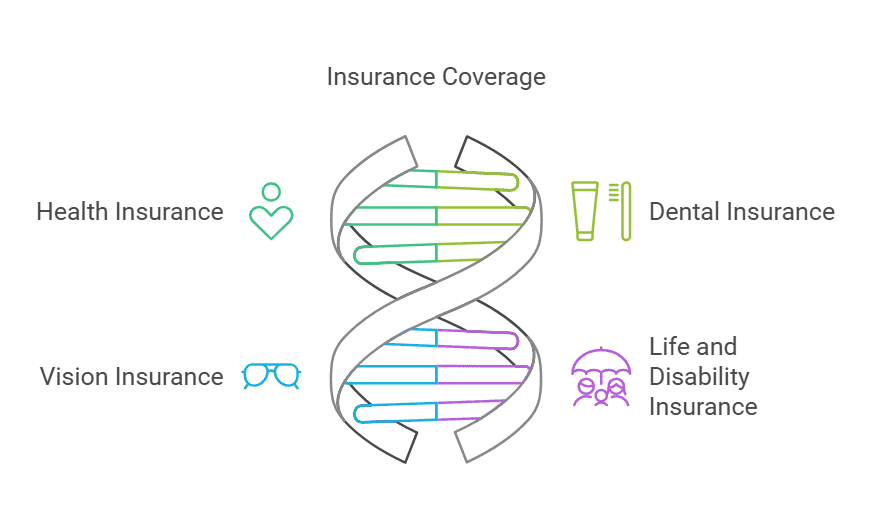
    Health insurance packages for employees can differ, but they usually consist of:
    PEO Health Insurance
    • Health Insurance: Includes coverage for appointments with doctors/hospitals and emergency care, along with preventive services.
    • Dental Insurance: Coverage for check-ups, cleanings, and treatments such as fillings or root canals.
    • Vision Insurance: Coverage for eye examinations, prescription glasses, and contact lenses.
    • Life and Disability Insurance: Provides financial security for employees in the event of disability or death.

    Small businesses find PEO group health insurance appealing as it offers comprehensive coverage for their employees’ well-being and healthcare needs.

    PEO Health Insurance Rates

    PEO health insurance rates for employees are often lower because of the combined risk and purchasing leverage of the PEO entity involved in the process. The rates are influenced by factors like company size, coverage options selected, as well as employee health conditions. On average, PEO health insurance plans tend to be 10 to 20 percent cheaper than plans acquired directly by businesses.

    What Is the Difference Between a PEO and a Staffing Company?

    Understanding the distinction between a Professional Employer Organization (PEO) and a staffing company is crucial for businesses seeking the right type of employment support. Both entities can assist in managing a workforce but serve distinct roles and functions.

    PEOs: Partners in Employment

    A PEO functions as a co-employer, sharing responsibilities with your business. This means they handle various HR duties, including:

    • Payroll processing: They manage payroll administration and ensure compliance with tax regulations.
    • Benefits administration: PEOs often provide access to comprehensive employee benefits, such as health insurance and retirement plans, that might be otherwise costly for smaller businesses.
    • Compliance support: They assist with navigating complex employment laws and regulations, minimizing compliance risks.

    By partnering with a PEO, companies can leverage the expertise of seasoned HR professionals, allowing them to focus on core business activities while ensuring efficient HR management.

    Staffing Companies: Providers of Talent

    A staffing company, on the other hand, primarily focuses on recruiting and placing employees. They are ideal for businesses needing:

    • Temporary staff: Quickly filling short-term needs for projects or seasonal work.
    • Permanent placements: Finding suitable candidates for long-term positions, often involving extensive screening and interviewing processes.
    • Specialized talent: Accessing niche skill sets or industry-specific experts that might not be easily found internally.

    While staffing companies manage the recruitment process, the hiring business remains the sole employer of the recruited staff, taking on HR responsibilities once a candidate is placed.

    Key Takeaways

    • Employment Relationship: PEOs co-employ your staff, sharing HR tasks, while staffing companies simply supply candidates.
    • Scope of Services: PEOs offer a wide range of HR services, whereas staffing firms focus predominantly on recruitment and placement.
    • HR Administration: PEOs provide ongoing HR support, allowing businesses to concentrate on strategic initiatives, while staffing companies offer a quick solution to immediate employment needs.

    Choosing between a PEO and a staffing company depends on your business needs. If you seek comprehensive HR solutions and risk management, a PEO might be the best fit. For rapid recruitment and flexible staffing, a staffing company could be the right choice.

    How to Ensure Your PEO Partnership Adapts to Your Business Needs

    To ensure that a Professional Employer Organization (PEO) partnership continues to meet your evolving business needs, regular communication is key. Here’s how to maintain a successful collaboration:

    1. Schedule Consistent Check-ins: Establish a routine for reviewing the partnership’s performance. This allows you to assess whether the PEO is aligning with your goals and can address potential issues early.
    2. Clearly Define Expectations: Begin with a detailed outline of your company’s short-term and long-term objectives. Sharing these with your PEO ensures they understand your strategic direction and can adjust their services accordingly.
    3. Solicit Employee Feedback: Gather insights from your team about the PEO’s performance. Employees can provide valuable perspectives on HR services, which can highlight areas that need improvement or confirm that the PEO is on track.
    4. Stay Informed About Industry Trends: Be aware of both industry advancements and changes in employment law that could impact your HR needs. This knowledge enables you to have informed discussions about service updates or modifications.
    5. Leverage Analytics and Reports: Use the data and performance reports provided by the PEO to make evidence-based decisions. Analyzing these metrics helps in gauging the partnership’s effectiveness and pinpointing areas that need attention.
    6. Flexibility to Change: If your current PEO isn’t meeting expectations, be prepared to explore other options. There are numerous PEOs with varied specializations, ensuring a match for your specific needs.

    Utilizing these strategies not only aligns your PEO partnership with your business’s current needs but also supports its growth and adaptation over time.

    How Can a Business Obtain Workers’ Compensation Through a PEO?

    Navigating workers’ compensation insurance can be a daunting task for many businesses. However, partnering with a Professional Employer Organization (PEO) offers a seamless approach to managing this obligation. Here’s how you can secure workers’ compensation through a PEO:

    1. Research and Select a Suitable PEO:
      • Begin by identifying PEOs that offer workers’ compensation solutions tailored to your industry.
      • Evaluate their reputation, client reviews, and the range of services they provide.
    2. Understand the Co-Employment Relationship:
      • When you enter into an agreement with a PEO, you share certain employment responsibilities. This is known as co-employment.
      • The PEO assumes responsibility for managing payroll, benefits, and workers’ compensation, while you maintain control over day-to-day business operations.
    3. Review and Negotiate the Agreement:
      • Go over the service agreement carefully before signing.
      • It should outline the specifics of the workers’ compensation coverage, including claims management and premium rates.
    4. Leverage the PEO’s Buying Power:
      • Since PEOs manage multiple clients, they have greater negotiating power with insurance carriers. This can lead to more competitive rates for workers’ compensation insurance.
    5. Streamlined Claims Management:
      • A PEO typically handles claims processing and risk management, ensuring that workers’ compensation claims are managed efficiently.
      • This can help reduce downtime and administrative burdens on your team.
    6. Benefit from Regulatory Expertise:
      • PEOs stay updated with changing regulations and compliance requirements, ensuring your business meets all legal obligations related to workers’ compensation.

    Why Choose a PEO for Workers Compensation?

    • Cost Efficiency: Potential for reduced insurance premiums due to PEO’s pooling of multiple businesses.
    • Expert Administration: Professional handling of claims and risk management.
    • Compliance Assurance: Regular updates and adherence to regulations without you needing to track changes constantly.

    By collaborating with a PEO, your business can streamline the workers’ compensation process, allowing you to focus on core operations while ensuring your employees are covered effectively.

    Understanding a Co-Employment Agreement with a PEO

    A co-employment agreement with a Professional Employer Organization (PEO) is a collaborative arrangement designed to streamline management tasks and enhance your business operations.

    When you enter into this agreement, the PEO becomes the employer of record for your workforce. This means they handle critical responsibilities like payroll processing, tax compliance, and benefits administration. Consequently, your employees receive paychecks and tax documents under the PEO’s name.

    However, it’s important to note that you retain complete control over the core functions of your business. Decisions related to daily operations, employee tasks, and strategic direction remain solely in your hands. By sharing administrative duties, you can focus more on growth and less on paperwork.

    In summary, a co-employment agreement allows you to benefit from the expertise and resources of a PEO, while maintaining full authority over how your company operates.

    Understanding Co-Employment vs. Employee Leasing

    In the realm of workforce management, co-employment and employee leasing often get confused, but they represent different forms of business relationships.

    Co-Employment

    Co-employment involves a partnership typically seen in Professional Employer Organizations (PEOs). Here’s how it works:

    • Shared Responsibilities: Both the PEO and the client company share employer responsibilities. The PEO handles HR duties such as payroll, benefits administration, and regulatory compliance. Meanwhile, the client company retains day-to-day oversight and control of the employees’ tasks and roles.
    • Employee Focus: Employees are effectively working for both the client company and the PEO, but remain under the client company’s direct supervision for their everyday activities.
    • Benefits: The client company benefits from the PEO’s expertise in managing HR functions, allowing it to focus on its core business activities while potentially offering better benefits to employees.

    Employee Leasing

    Employee leasing is a different scenario, often associated with staffing agencies. Here’s the breakdown:

    • Transfer of Employees: In this setup, employees are technically employed by the leasing agency, not the client company. The staffing agency leases these employees to the client for a specified period.
    • Control and Supervision: While the employees work at the client company’s site, the leasing agency retains control over employment-related aspects, such as hiring, discipline, and termination. The client company directs the employees’ daily work.
    • Temporary Nature: Employee leasing is usually short-term and often caters to project-based work or temporary staffing needs.

    Key Differences

    1. Employment Status:
      • Co-Employment: Employees are co-employed by the client and the PEO.
      • Employee Leasing: Employees are technically employed by the leasing agency.
    2. Responsibility Sharing:
      • Co-Employment: Shared HR responsibilities between the client and PEO.
      • Employee Leasing: Most employment responsibilities lie with the leasing agency.
    3. Duration:
      • Co-Employment: Long-term partnership focused on ongoing business operations.
      • Employee Leasing: Typically short-term, fulfilling immediate workforce needs.

    Understanding these distinctions helps businesses choose the right strategy for their staffing and HR needs. Co-employment suits organizations seeking continuous support and shared HR functions, while employee leasing caters to temporary or project-based staffing requirements.

    Challenges Small Businesses Often Face with Health Insurance Options

    High Costs and Limited Variety

    Small businesses face a major hurdle in securing health insurance due to the high costs involved and their lack of negotiating leverage compared to larger companies. PEO health insurance offers a solution by providing cost-effective coverage that small businesses may not have access to otherwise.

    Tasks That Involve Paperwork and Red Tape

    Managing health insurance internally involves a lot of administrative work. Dealing with paperwork and ensuring compliance with healthcare regulations takes up significant time for business owners and distracts them from their primary business operations. Professional Employer Organizations (PEOs) help ease this workload by handling tasks such as employee enrollments and compliance issues, so that business owners can dedicate their attention to growing their business and improving productivity.

    PEO4YOU – A Unique PEO

    Flexible Payroll and Workers Compensation Requirements

    PEO4YOU is unique among Professional Employer Organizations because it doesn’t mandate businesses to switch their payroll provider or workers’ compensation policy like most other PEOs do. This flexibility enables business owners to keep their existing payroll system and workers’ compensation policy without any interruptions while also enjoying the excellent health benefits, such as dental and vision plans, provided by PEO4YOU.

    Stable Costs and Predictable Renewals
    PEO Health Insurance

    PEO4YOU stands out by providing stable premiums that do not depend on the age and health of employees. This sets it apart from regular PEO services where renewal costs often rise based on claims usage data. The typical renewal rate increase for PEO4YOU over five years is below 16%, contrasting with the national average of 40%. PEO4YOU also manages COBRA coverage to ensure former employees can still access healthcare—a valuable service for numerous small businesses.

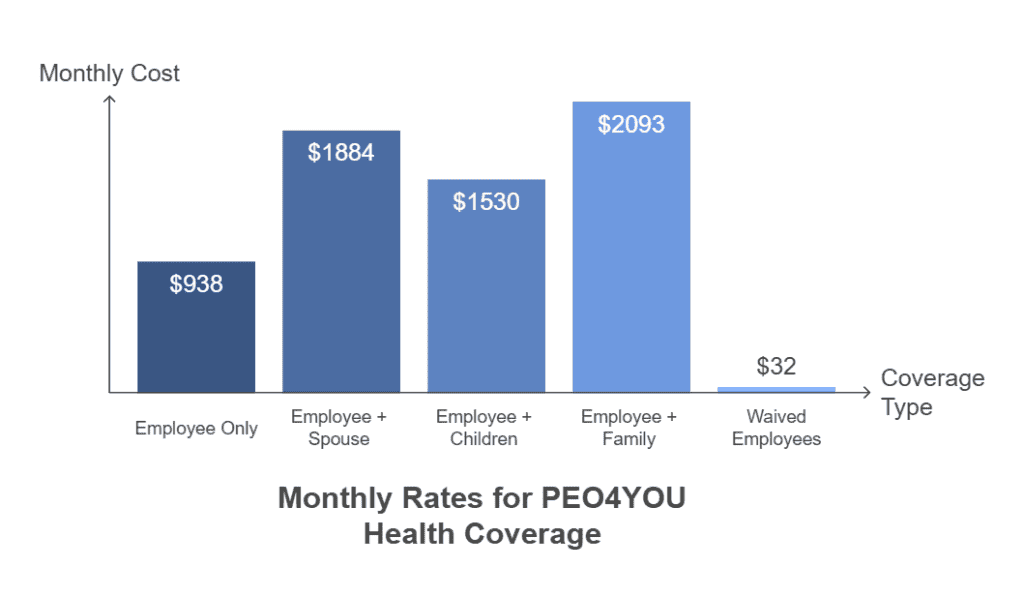
    Here are the rates for PEO4YOU:

    • Employee Only: $938 per month
    • Employee + Spouse: $1,884 per month
    • Employee + Children: $1,530 per month
    • Employee + Family: $2,093 per month
    • Waived Employees: $32 per month

    These rates provide comprehensive coverage, including medical, dental, vision, and life insuranceReal-World Examples Showcasing the Benefits of PEO Health Insurance

    Case Study: How a Small Business Owner Benefits from PEO Health Insurance

    Sarah, a small business owner with 15 employees, faced challenges in providing affordable health insurance for her team members. Collaborating with a PEO enabled her to secure a PEO health insurance plan that offered improved coverage at a budget rate compared to what she could source independently. By joining forces with the PEO scheme, she ensured that her employees had access to the healthcare options offered by the Blue Cross Blue Shield PPO network. This stability in premiums and cost-effectiveness freed up resources for Sarah to reinvest in other aspects of her business operations.

    Case Study: Small Company Opts for PEO4YOU to Reduce Expenses

    David manages a company that employs 25 individuals, with many of them supporting families. The average age of his team is on the higher side when compared to other businesses in the same industry category. Upon exploring Professional Employer Organization (PEO) alternatives, he found that the options quoted had higher rates due to the team members’ average age being higher. Fortunately, David discovered a cost-effective solution through PEO4YOU, which didn’t necessitate altering their current payroll or workers’ compensation arrangements. PEO4YOU was the perfect fit for David’s business due to its fixed rates and access to the Blue Cross Blue Shield PPO network, enabling him to offer top-tier healthcare benefits within his budget constraints.

    Insights from Professionals on Health Insurance Provided by a PEO

    Insights from Industry Experts

    Sam Newland shared that health insurance offered by a PEO (Professional Employer Organization) can make a significant difference for small businesses and independent contractors by leveraging risk pooling among various companies to provide competitive rates and coverage choices that may not be accessible otherwise to many small businesses.

    According to a study by NAPEO, companies utilizing PEO services experience a decrease in employee turnover rates by up to 40%. This improvement can be attributed to the health benefits provided by PEO partnerships and emphasizes the significance of PEO health insurance in retaining employees and driving business prosperity.

    How to Choose the Best PEO for Health Insurance

    Assessing the Requirements of Your Business

    When selecting a PEO for health insurance, coverage for your business needs must be evaluated first and foremost. Think about the size, health, demographics of your workforce, the types of benefits you aim to provide, and your financial constraints. Bear in mind that not all PEO service providers are the same, hence it is vital to discover one that aligns with your needs.

    Exploring the Cost of Health Insurance Plans Offered by PEOs

    When you’re reviewing health insurance rates from Professional Employer Organizations (PEOs), it’s important to consider not only the premiums but also the range of coverage they offer. Some of these organizations might advertise lower premiums; however, they could have restricted networks or higher employee out-of-pocket expenses. It’s crucial to select a reliable provider that offers comprehensive coverage that benefits both your company and its employees effectively.

    Verifying the List of Service Providers

    One important consideration when choosing the PEO for health insurance is the network of providers they offer. For comprehensive coverage, it’s preferable to opt for a PEO that provides a PPO network, like Blue Cross Blue Shield. This enables your employees to have a broad choice of healthcare providers nationwide, giving them the freedom to select their preferred healthcare professionals.

    Conclusion

    PEO health insurance provides an option for enterprises, independent contractors, and sole proprietors who aim to offer thorough health coverage without straining their budgets. By utilizing the group buying influence of a PEO service provider, small businesses can secure pricing options, broader coverage, and efficient administrative assistance. This not only aids in expense management but also enhances the appeal of your business to potential employees.

    If you’re a business owner seeking budget-efficient health insurance solutions for your employees, it is crucial to consider teaming up with a Professional Employer Organization (PEO). By opting for a PEO partnership, you can access advantages such as reduced expenses, improved insurance coverage, and streamlined administrative tasks, which can play a key role in providing top-tier health insurance benefits to your workforce.

  • Employer Health Plans: A Guide for Small Business Owners

    Employer Health Plans: A Guide for Small Business Owners

    What Are Employer Health Plans?

    Employer health plans are health insurance plans provided by employers to their employees as part of the benefits package. These plans typically cover medical, dental, and vision services, depending on the type of plan offered. Employer-sponsored health plans are generally more affordable for employees compared to individual policies because the employer shares the cost of premiums, making healthcare more accessible.

    Types of Employer Health Insurance Plans

    Employers have several options when selecting a health insurance plan for their workforce. The types of employer health insurance plans include:

    Employer Health Plans
    • Fully Insured Plans: In this model, the employer pays a fixed premium to an insurance company, which assumes the financial risk of providing healthcare coverage.
    • Self-Funded Employer Health Plans: Here, the employer takes on the risk of covering medical expenses rather than paying premiums to an insurance carrier. Employers often work with third-party administrators to manage claims.
    • Health Maintenance Organization (HMO) Plans: Employees must use a network of healthcare providers. HMOs usually have lower premiums but are less flexible.
    • Preferred Provider Organization (PPO) Plans: Employees can visit any healthcare provider, but they receive better rates by using providers in the network. PPOs are more flexible but generally have higher premiums.
    • Exclusive Provider Organization (EPO) Plans: Similar to HMOs but do not require a referral to see specialists, while still limiting coverage to network providers.
    • Point of Service (POS) Plans: These plans are a hybrid of HMO and PPO models. They allow more flexibility in choosing healthcare providers but still require referrals for specialists.

    Why Employer Health Insurance Plans Are Beneficial

    Employer-Sponsored Health Plans vs. Individual Policies

    Why are employer health insurance plans often better than individual policies? Employer health plans generally have lower premiums and better coverage options due to the shared cost between the employer and employee. Additionally, employers can negotiate better group rates, offering comprehensive healthcare coverage that is more affordable compared to individual market plans.

    Employer health insurance plans also typically offer tax advantages to both employers and employees. Employers can deduct health insurance premiums as a business expense, while employees often pay their share of premiums with pre-tax dollars, reducing their taxable income.

    Benefits of Employer Health Plans for Small Businesses

    Offering a competitive employer health insurance plan helps small businesses attract and retain top talent. It shows that the employer cares about their employees’ well-being, fostering a sense of loyalty and job satisfaction. Moreover, studies indicate that companies with good health benefits often experience increased productivity and reduced absenteeism.

    Through committed actions businesses can enhance the wellness of employees while advancing community health.

    To enhance workforce well-being alongside community health improvement requires a holistic approach to physical, mental, and emotional health. Businesses which adopt this strategy generate positive outcomes for their workforce and neighboring communities.

    Comprehensive Health Resources

    The creation of a complete resource collection remains essential. This can be achieved by:

    Expanding Access to Mental Health Care: Companies must provide their employees with access to high-quality mental health services. The expansion of access to mental health care services should incorporate telehealth methods along with adaptable work schedules and affordable care options.

    Integrated Health Solutions: Develop programs that simultaneously target physical wellness alongside mental and emotional well-being. Integrated care systems deliver superior results when they approach patient treatment through a holistic perspective.

    Promote Inclusivity and Equity: Provide individualized support to acknowledge and honor each employee’s distinct experiences. The workplace becomes more equitable and ensures every employee feels appreciated.

    Key Components of Employer Health Insurance Plans

    Coverage Options

    When choosing employer health care plans, it’s important to understand the different coverage options available, such as:

    • Medical Coverage: Covers visits to healthcare providers, hospital stays, preventive care, and prescription drugs.
    • Dental and Vision Coverage: Many employer plans include optional dental and vision benefits, which cover check-ups, cleanings, eyewear, and more.
    • Mental Health Services: Most employer health plans provide some level of mental health support, including access to counseling and therapy services.

    Businesses need to understand the special health insurance requirements that suit their specific circumstances.

    Unique Health Insurance Requirements for Businesses

    Every business requires its own specific health insurance solution which is influenced by its industry sector, size of its workforce and the characteristics of its employees. Businesses need to evaluate several factors when choosing health insurance plans.

    Workforce Demographics: Employees who are younger tend to value wellness programs and older employees prefer comprehensive coverage for chronic conditions.

    Industry-Specific Needs: Construction businesses need stronger insurance plans because of their higher risk profile while tech firms prioritize mental health benefits to support employee well-being.

    Cost Management: Balancing affordable premiums with extensive benefits. Businesses look for insurance plans that reduce pharmacy costs or use big provider networks to manage their spendings.

    Employee Experience: When businesses provide easy access to healthcare services along with a streamlined claims process they increase both employee satisfaction and productivity.

    Flexibility and Customization: Businesses require customizable plans that provide different levels of coverage and optional add-ons to address the varying needs of their employees.

    When businesses concentrate on specific needs they create customized health insurance solutions that meet employer and employee needs while encouraging wellness and managing expenses.

    Cost of Employee Benefits to Employer

    How much do benefits cost an employer? The cost of providing health insurance varies significantly based on the size of the company, the type of plan, and how much the employer contributes. On average, employers pay about 70-80% of the premiums for employee-only coverage and 50-60% for family coverage. According to the KFF 2024 Employer Health Benefits Survey, the average annual premium was $8,951 for single coverage and $25,572 for family coverage.

    Employer Self-Insured Health Plans

    Some employers opt for self-funded employer health plans where they take on the financial risk of providing health benefits. Self-insured plans are more common in larger companies, but small businesses can also benefit if they have a healthy workforce and can manage the financial risk.

    Common Challenges of Employer Health Insurance Plans

    Employer Health Plans

    Rising Premium Costs

    A significant challenge for small businesses is the rising cost of healthcare premiums. According to the KFF Employer Health Benefits Survey, premiums have increased by approximately 22% over the past five years (2021-2025 preliminary 5-year increase data appear to be around 30%). This makes it difficult for small businesses to offer competitive benefits without straining their budgets.

    Can an Employer Change Health Plans Mid-Year?

    Can an employer change health plans mid-year? Generally, employers can change insurance carriers any time throughout the year. In practice, employers tend to change at the existing plan’s renewal. If changing mid-year, the employer should comply with IRS Section 125 regulations and communicate clearly with employees.

    Employee Awareness and Engagement

    Employees may not fully understand the details of their health insurance plans, which can lead to confusion and underutilization of benefits. Employers should provide clear communication and resources to help employees make informed decisions about their healthcare.

    Which methods can organizations implement to build a health-focused workplace environment?

    To create a workplace culture of health organizations need to focus on technical wellness solutions as well as human healthcare elements. Here’s how organizations can effectively achieve this:

    Enhance Access to Mental Health Care: Work with insurance providers to deliver mental health services with affordable and extensive coverage options.

    Organizations should partner with BetterHelp and Talkspace to make it easier for employees to connect with certified mental health specialists.

    Adopt a Holistic Health Strategy: Combine programs that address mental health with those that improve physical fitness and emotional well-being to promote full employee wellness. Health specialists should partner together to provide complete care for employees which improves value-driven healthcare services.

    Combat Mental Health Stigma:Organize educational workshops and seminars to inform about mental health disorders and to eliminate stereotypes. Organize events with guest speakers who share their mental health experiences to help normalize conversations around this important topic.

    Promote Equity and Individual Support:Personalized health plans should be funded to address each employee’s unique healthcare requirements. Employees from diverse backgrounds must have equal access to wellness resources which allows them to receive customized support.

    Broaden Behavioral Health Benefits:Extend wellness program offerings by adding yoga sessions, fitness competitions, and mindfulness seminars. Work with digital platforms such as Headspace and Calm to embed mental health practices into everyday employee routines.

    A workplace health culture that supports employee well-being results in improved productivity and employee loyalty while establishing wellness as a fundamental element of organizational achievement.

    Which Is Usually True of Employer-Sponsored Health Insurance Plans?

    Employer-sponsored health insurance plans typically have several consistent features:

    • Shared Costs: Employers pay a portion of the premiums, which makes coverage more affordable for employees.
    • Guaranteed Issue: Employees are not denied coverage due to pre-existing conditions.
    • Open Enrollment Periods: Employers offer specific periods during the year for employees to enroll, drop, or make changes to their health plans.

    The Best Employer Health Insurance Plans

    How to Compare Employer Health Insurance Plans

    When selecting the best employer health insurance plans, consider factors such as:

    • Network Size: Does the plan offer access to a wide network of healthcare providers?
    • Premium Costs: How much will both the employer and employee pay?
    • Out-of-Pocket Costs: Deductibles, copays, and coinsurance should be evaluated to ensure affordability.
    • Flexibility: Are there options to customize the plan according to employee needs?

    Employer Health Plans for Small Businesses

    Small businesses should consider small employer health plans that provide adequate coverage while remaining budget-friendly. Many insurers offer specific plans designed for small businesses with fewer than 50 employees, which can include tax incentives and streamlined administrative processes.

    Self-Funded Employer Health Plans: Pros and Cons

    Advantages of Self-Funded Plans

    • Cost Savings: Employers can save money if employees have lower-than-expected healthcare costs.
    • Plan Customization: Employers have more flexibility in designing a plan that suits the needs of their workforce.

    Disadvantages of Self-Funded Plans

    • Financial Risk: Employers assume all the risk for claims, which can be costly in years with high medical expenses.
    • Complex Administration: Self-funded plans require more involvement in managing claims and compliance, often necessitating a third-party administrator (TPA).

    Level funded plans provide a good alternative to self-funded plans by guaranteeing all medical claims are covered. However, the level funded plan is not guaranteed to continue to be offered at renewal if medical claims are too high.

    PEO4YOU: A Unique Healthcare Solution

    How PEO4YOU Compares

    PEO4YOU stands out from traditional Professional Employer Organizations (PEOs) because it does not require changes in payroll and workers’ compensation insurance or medical underwriting with rates not reliant on age or family size, unlike most other PEOs. 

    Additionally, PEO4YOU offers access to the Blue Cross Blue Shield (BCBS) PPO network, the largest provider network in the U.S., with an estimated 1.7 million providers and over 200,000 mental health practitioners. This extensive network ensures that employees have access to quality care nationwide.

    Case Studies and Real-World Applications

    Small Business Choosing Employer Health Insurance Plans

    Consider a small marketing agency with 20 employees. The owner decides to offer an employer-sponsored health insurance plan to attract top talent and reduce turnover. After comparing options, the agency chooses a PPO plan that offers flexibility for employees who prefer choosing their healthcare providers. The business shares 75% of the premium costs, making it an attractive offer for employees.

    Small Business Choosing PEO4YOU

    Another example involves a small IT consulting firm with 15 employees, including several families and a higher average employee age. The company initially considered a traditional PEO, but the rates were significantly higher due to the family-heavy demographic and age factors. By switching to PEO4YOU, the business was able to secure competitive rates and provide comprehensive benefits through the BCBS PPO network. The company also benefited from the predictable renewal rates, which were not dependent on its own claims history, making budgeting for healthcare costs more manageable.

    Conclusion

    Employer health plans play a crucial role in employee satisfaction and retention, making them an essential consideration for small businesses, independent contractors, and sole proprietors. By understanding the various types of employer health insurance plans, evaluating costs, and comparing options, business owners can make informed decisions that benefit both their employees and their bottom line.

    Providing health insurance not only makes your company more competitive but also fosters a healthier, more productive workforce. Whether opting for a fully insured plan, a self-funded employer health plan, or exploring small employer health plans, the key is to find a balance between comprehensive coverage and affordability.

    If you’re considering offering health insurance or reassessing your current plan, start by evaluating the needs of your workforce and seeking professional guidance to select the best plan that fits your budget.

  • Small Business Owners Group Health Benefits Handbook

    Small Business Owners Group Health Benefits Handbook

    Introduction

    In the fast-paced world of business today, it’s essential for companies aiming to recruit and retain the best employees to provide a comprehensive benefits package that includes small group health insurance as a key offering. The provision of health care not only ensures the well-being and engagement of your workforce but also plays a vital role in keeping your business ahead in the competitive market landscape.

    In this article, we will delve into the choices offered in small business health insurance plans. We’ll look at the plan options for small groups and compare them with large group health insurance policies. We will also offer information on small group health insurance costs and help business owners in selecting the best health coverage for their staff members.

    What Does Small Business Owners Group Health Insurance Entail?

    Exploring the Basics of Small Business Health Insurance

    Small business group health insurance is when small companies provide healthcare benefits to their workers and their families. Companies with fewer than 50 employees usually qualify for these plans. The aim of these plans is to give employees and their dependents access to health benefits at lower costs compared to individual plans.

    The Significance of Small Business Owners Group Health Insurance

    Small businesses benefit from offering health insurance as it promotes a positive workplace atmosphere and enhances employee contentment while decreasing staff turnover rates—an important aspect for companies depending on specialized talent. Moreover, providing health insurance could make small businesses eligible for tax benefits, ultimately reducing their financial burdens.

    Different Options for Small Group Health Insurance Coverage

    Small Business Owners Group Health Insurance

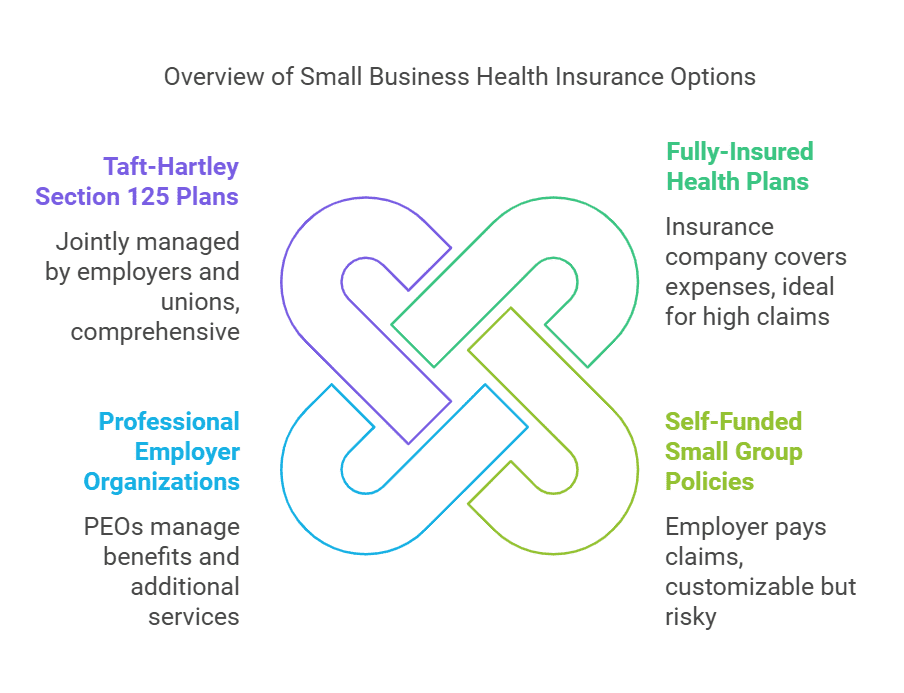
    Fully-Insured Group Health Plans

    In the realm of group health insurance for businesses, the fully-insured health plan stands out as the prevailing choice. The small business commits to a premium paid to an insurance provider in this scenario. The insurance company shoulders the burden of healthcare expenses, simplifying the process and ensuring predictability. Financially, these plans work best for companies with a lot of medical claims.

    Self-Funded Small Group Policies

    Employer health plans that are funded independently are not widely used by small businesses; however, they can prove to be economical under certain circumstances. The employer is responsible for paying healthcare claims in a self-funded plan and takes the risk of potential higher medical expenses. This approach enables a degree of customization for health benefits but necessitates thorough assessment owing to the risks involved.

    Professional Employer Organizations (PEOs)

    Small businesses often opt for Professional Employer Organizations (PEOs) to handle employee health benefits without having to deal with the tasks themselves. These organizations team up with businesses to offer health insurance packages along, with additional perks such as payroll, workers’ compensation, and HR services.

    Taft-Hartley Section 125 Benefits Offerings

    Taft-Hartley 125 plans are group health and welfare plans created under the Taft-Hartley Act and are typically managed collaboratively by employers and labor unions. These plans offer premiums, copays, deductibles, and access to a wide network of healthcare providers. PEO4YOU stands out as a professional employer organization offering Taft-Hartley 125 plans that come with comprehensive benefits and do not require any adjustments to payroll or workers’ compensation policies. This makes it an appealing choice for small businesses.

    Health Maintenance Organization (HMO) Plans

    Health Maintenance Organization (HMO) plans provide access to a group of healthcare providers that employees need to visit for insurance coverage to apply effectively within the plan’s guidelines and requirements. These types of plans are often more budget-friendly; however, they do have restrictions when it comes to selecting a healthcare provider outside of the network. For businesses aiming for cost-effective solutions for employee healthcare coverage, opting for an HMO could be a wise decision.

    Preferred Provider Organization (PPO) Plans

    Preferred Provider Organization (PPO) plans offer flexibility by enabling employees to see any healthcare provider without needing a referral. PPO plans typically come with higher premiums compared to other options but offer a broader selection of providers, a feature that appeals to businesses looking to provide thorough coverage for their employees.

    Exclusive Provider Organization (EPO) Plans

    EPO plans merge aspects of HMO and PPO models where employees are required to visit in-network providers without referrals for treatment while offering a mix of cost-effectiveness and service options.

    Small Group vs. Large Group Health Insurance

    Distinguishing Characteristics of Small and Large Group Health Insurance

    Group health insurance varies based on group size and company eligibility requirements in terms of cost and regulations. Small group plans cater to businesses with fewer than 50 employees, while large group health insurance is meant for companies with 50 or more employees.

    • Cost: The price for small group plans is usually higher per employee as they cover fewer individuals, which limits the insurer’s capacity to distribute risk effectively.
    • Regulations: Small group plans are required to adhere to regulations outlined in the Affordable Care Act (ACA), which involve providing coverage for essential health benefits.
    • Flexibility: Large group plans typically provide more flexibility in coverage choices because of the cost savings associated with operating at scale.

    Advantages of Small Business Health Insurance for Small Groups

    Small Business Owners Group Health Insurance Handbook

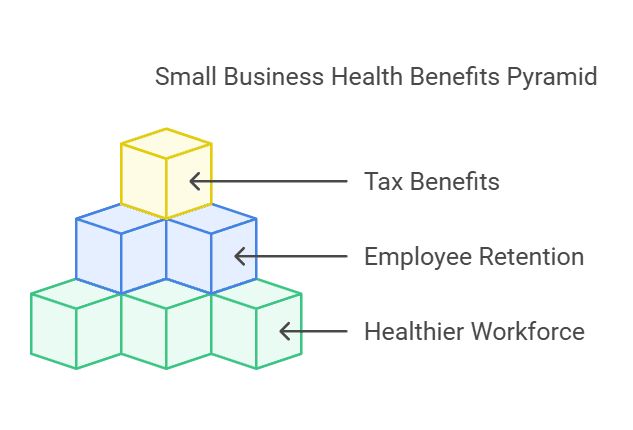
    Reasons Why Small Businesses Should Provide Group Health Coverage

    Provided that small businesses offer group health insurance, they can benefit in several ways:

    • Employee Retention: Maintaining a strong workforce hinges on the provision of top-notch health insurance benefits to employees—especially in sectors with fierce competition for talent.
    • Tax Benefits: Small businesses may be eligible for the Small Business Health Care Tax Credit if they provide group health insurance to their employees, which can help make healthcare more affordable.
    • Healthier Workforce: Having access to healthcare services promotes a more robust workforce that can enhance productivity and lower absenteeism rates.

    Small Group Health Insurance Requirements

    Criteria for Qualification

    For a company to qualify for small business group health insurance, it needs to have a staff size ranging from one to fifty employees. As per standard practice, most insurance providers mandate that a minimum of 50% or 70% of eligible employees must enroll in the plan to qualify for coverage. This requirement aids in distributing the risk evenly and guarantees the sustainability of the insurance plan for the provider.

    Contribution Requirements

    Employers typically need to cover at least half of the costs for employees’ insurance premiums, which not only makes the plan more budget-friendly for employees but also boosts enrollment rates.

    Exploring the Differences Among Small Business Health Insurance Options

    Best Group Health Insurance for Small Businesses

    When you’re searching for the best group health insurance for small businesses, there are several important aspects to take into account:

    1. Coverage Options: Make sure that your plan includes essential health benefits such as preventive care services, hospitalization, and prescription medication coverage.
    2. Network Size: Make sure the insurance plan includes a broad range of healthcare providers so that employees can easily access the services they need.
    3. Premium Costs: When looking at premium expenses, it’s important to compare the costs of plans and consider how much both the employer and employees will have to contribute.
    4. Additional Benefits: Consider exploring options that offer dental and vision benefits too; these are often valued incentives among employees.

    Group Health Insurance Options for Small Businesses

    Small businesses can choose from a range of group health insurance plans provided by companies like Humana, UnitedHealthcare, and Blue Cross Blue Shield to provide coverage at competitive rates.

    How Much is Group Health Insurance for a Small Business?

    Average Cost Breakdown

    The cost of group health insurance for a small business can fluctuate depending on the location of the business, the ages of its employees, and the specific insurance plan selected.

    • Single Coverage: $450-$650 per month per employee
    • Family Coverage: $1,200-$1,900 per month

    These costs can be reduced if the company qualifies for tax breaks or if employees opt for plans with higher deductibles and lower premiums.

    Case Studies: Small Business Success Stories

    Case Study 1: A Marketing Firm Finds Affordable Health Coverage

    A small marketing firm with 15 staff members faced challenges in securing a budget-friendly group health coverage option for their team members until they discovered a PPO plan that stood out for its versatility and comprehensive benefits among other small business group health insurance plans available on the market. Utilizing the Small Business Health Care Tax Credit enabled the agency to slash costs by 35%, making health insurance accessible and affordable for both the company and its employees.

    Case Study 2: Opting for PEO4YOU Benefits for Health Insurance

    An IT consulting firm with 10 employees was dealing with rising health insurance expenses every year. To address this issue without having to make changes to their payroll or workers’ compensation policies like traditional PEO services required, the owner decided to consider using PEO4YOU, which offered competitive rates that were especially beneficial for a workforce consisting of families and older employees. Switching to PEO4YOU allowed the company to access the Blue Cross Blue Shield (BCBS) PPO network and provided them with steady renewal rates that were unaffected by their claims history.

    Conclusion

    Providing small group health insurance is a wise choice for small businesses looking to invest in their employees’ well-being and productivity. It not only aids in the recruitment and retention of staff but also fosters a healthier work environment. By diving into the kinds of group health insurance plans tailored for small businesses and evaluating costs and alternatives carefully, business owners can identify the most suitable plan that aligns with their financial constraints and meets their employees’ requirements effectively.

    If you’re thinking about providing health insurance or looking to compare your current plan with other choices out there, it’s a smart move to reach out to a small group health insurance broker for advice and support tailored to your needs in understanding the ins and outs of health insurance for small businesses.