

The United States health insurance network functions as a complicated and divided system that creates major obstacles for both government officials and private sector businesses as well as everyday citizens. Healthcare continues to face systemic problems with inefficiency and high expenses alongside unequal access even though there are continuous debates and reform attempts. Small businesses and self-employed individuals along with low-income families experience serious effects because they face difficulties obtaining affordable comprehensive health coverage. This article examines the main obstacles to successful health insurance reform along with its effects on different stakeholders and the outcomes of ignoring these systemic inefficiencies.
The health insurance system faces significant challenges due to the rapidly increasing expenses for medical services and insurance premiums. Although the United States spends more on healthcare than any other developed country, access to medical services and health outcomes vary widely. According to the Kaiser Family Foundation (KFF) research findings 63% of uninsured adults remain without insurance due to prohibitively high costs. Insurance holders must deal with deductibles and copays that generate substantial financial burdens which make essential medical services unaffordable. A complete overhaul of health insurance policy becomes necessary to alleviate financial burdens faced by patients.
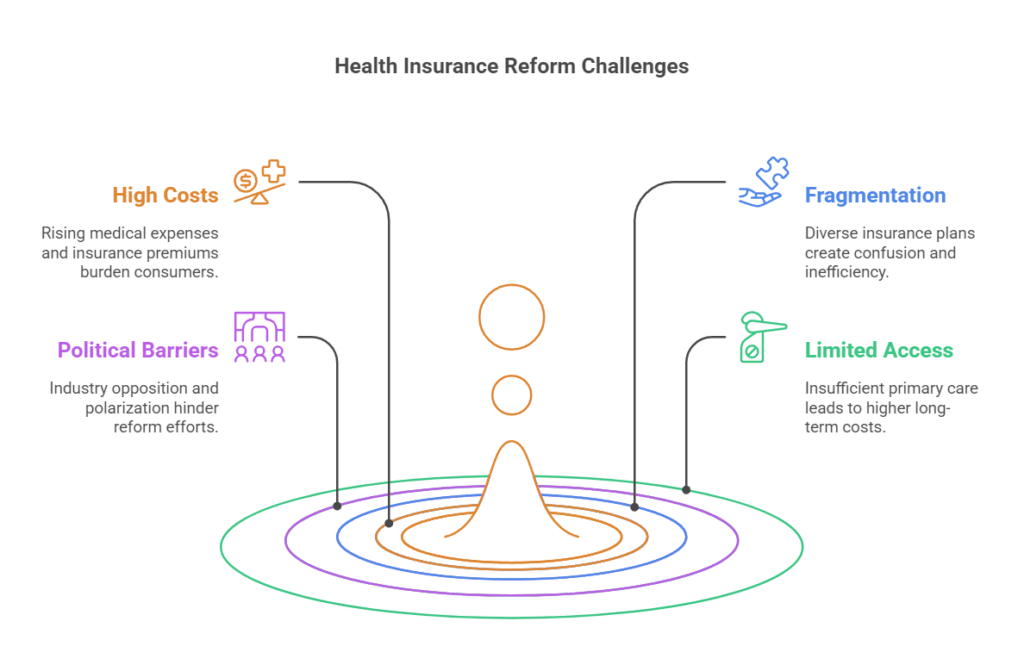
The U.S. healthcare system operates as a complex mix of private insurers and employer-sponsored plans along with Medicaid, Medicare, and marketplace options which creates confusion and leads to inefficiency. The complex task of managing various insurance plans and their respective networks creates administrative burdens which increase healthcare expenses. According to a study published in NEJM Catalyst the United States incurs higher administrative expenses than other wealthy countries because its healthcare system remains fragmented. Health insurance reform presents an opportunity to eliminate these inefficiencies and cut unnecessary expenses.
Powerful industry groups like private insurance companies along with pharmaceutical firms and healthcare providers stand against changes to the health insurance system. The divisive nature of politics adds layers of complexity to healthcare reform as discussions about government involvement in healthcare create legislative standstills. Healthcare stands as one of the most contentious political issues according to the Gallup Poll because of significant disagreements about how to proceed. Health insurance reform can succeed only if policymakers manage to break down these obstacles while building bipartisan consensus.
Healthcare inefficiencies primarily arise from insufficient focus on primary and preventive care services. According to the Pan American Health Organization (PAHO) primary healthcare development plays a vital role in reaching universal health coverage and decreasing future medical expenses. The reform of health insurance systems needs to prioritize improving access to primary care in order to reduce medical expenses over time.
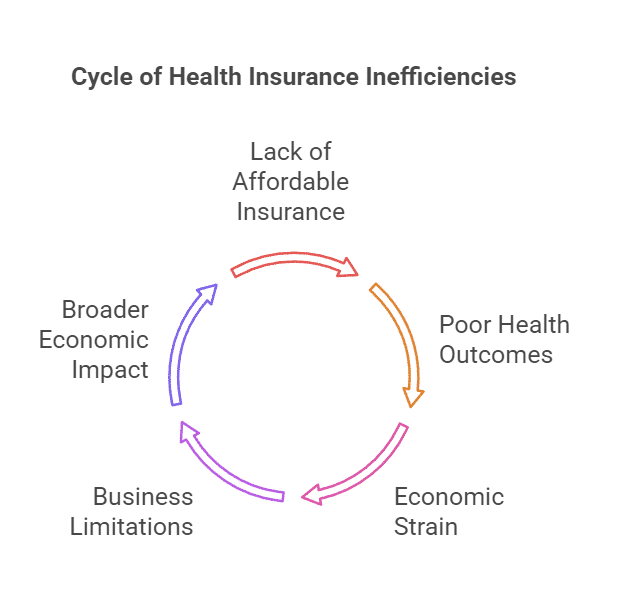
Individuals without affordable health insurance options tend to avoid preventive care and delay medical treatment for their conditions. Major health disparities might be reduced through health insurance reform which improves access to preventive care services.
Families and businesses both experience financial strain from expensive healthcare costs. Medical debt remains a primary driver of bankruptcy filings throughout the United States. The JPMorgan Chase Institute report reveals that small businesses providing health benefits face reduced profitability and restricted growth due to rising insurance costs. The economic burden from expensive health care reaches beyond family units by constraining both consumer expenditure and corporate investment throughout the entire economy. To stabilize healthcare costs and protect millions of Americans from financial distress we need health insurance reform.
The health insurance system needs both complete policy reforms and new solutions which offer better access and affordability to address its current challenges. Individuals and businesses need to find appropriate coverage in the current system because systemic changes are essential.
Businesses such as PEO4YOU serve an important function as intermediaries connecting insurance companies with their clients. PEO4YOU helps small businesses and self-employed workers along with families find insurance coverage that balances affordability with comprehensive benefits through their customized health plan solutions. Their knowledge enables clients to select appropriate insurance options that meet their specific requirements while delivering essential assistance through a complex insurance landscape.
April 16, 2026

April 16, 2026
April 15, 2026
April 15, 2026
Recent Posts

April 16, 2026

April 16, 2026

April 15, 2026

April 15, 2026

April 14, 2026

April 14, 2026
Get In Touch— We’re available 24/7
"*" indicates required fields
“We respect your privacy. Your contact information will be used solely for the purpose of responding to your inquiry and will not be shared with third parties.”
Click To Open Modal
Get In Touch— We’re available 24/7
"*" indicates required fields
“We respect your privacy. Your contact information will be used solely for the purpose of responding to your inquiry and will not be shared with third parties.”
Thanks!
We will be in touch soon.
If you're looking to book a consultation now
Affordable health and benefits plans for small businesses, freelancers, and independent contractors.



Copyright © 2026. Peo4you. All rights reserved.