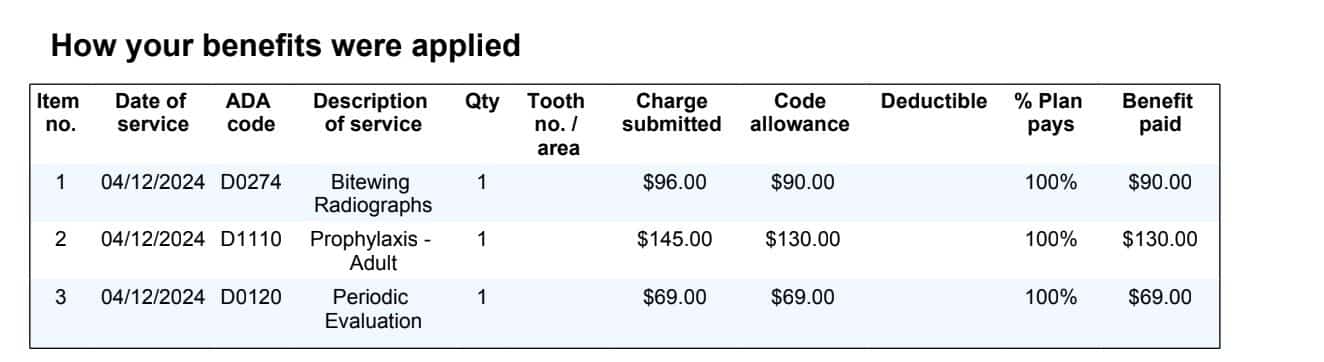


Healthcare in the United States continues to grapple with rising costs and varying quality of care. Unlike other industries that leverage competition and price transparency to boost efficiency, healthcare has struggled to adopt these principles. Integrating competition and transparent pricing could enhance care quality, reduce expenses, and empower patients with better choices. Examples from the U.S. and global healthcare systems underscore the profound impact of these strategies.
U.S. healthcare costs is famously unclear and complex. Patients frequently face hidden costs, only learning their expenses post-treatment, which often leads to unexpected financial burdens. Opaque pricing prevents consumers from seeking value and removes pressure on providers to enhance efficiency or quality.
A 2021 study by the RAND Corporation revealed that hospital prices in the U.S. are, on average, 247% higher than Medicare rates (RAND Corporation, 2021, source). A 2024 survey by PwC revealed that 28% of consumers delayed or skipped medical care due to financial constraints, with younger generations, such as Gen Z and millennials, experiencing even greater difficulty.HealthManagement. Without clear pricing, consumers cannot shop for better value, and providers face little pressure to improve efficiency or quality.
The complexity of pricing affects all aspects of the system. For instance, bundled services—such as a hospital stay that includes medications, surgery, and post-operative care—make it difficult for patients to discern how costs are distributed. This opacity further hinders competition because patients cannot easily compare services across providers.
Competition encourages providers to improve quality and lower prices to attract patients. The generic drug market exemplifies how competition drives down prices while maintaining quality. A 2019 report by the AAM noted that generic drugs saved the U.S. healthcare system $313 billion annually
Reference Pricing: Reference pricing is a healthcare payment model where insurers or payers establish a maximum allowable reimbursement rate for specific medical procedures that is generally tied to regional and national averages or a percentage of Medicare rates. In California, the CalPERS initiative implemented this model for hip and knee replacements, compelling hospitals to compete by offering services at or below the set rate. What were the results?
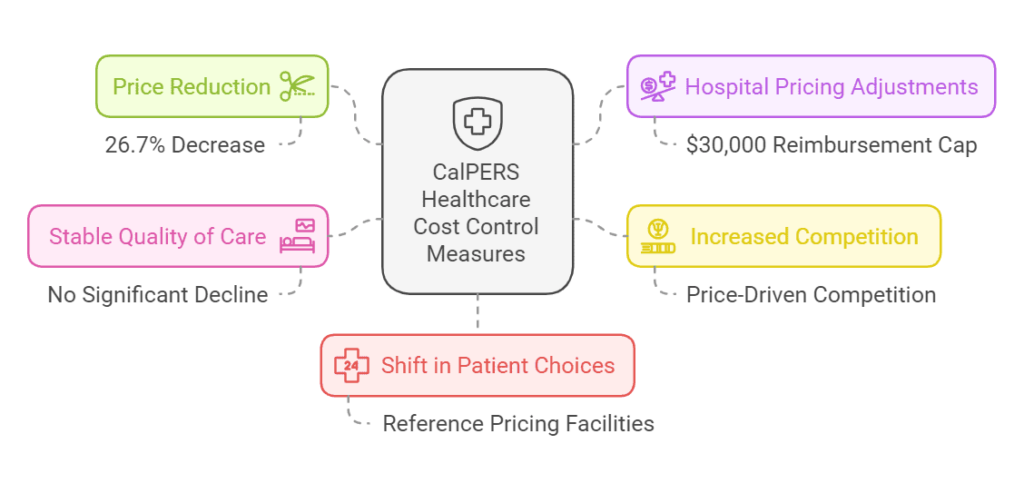
This approach demonstrates that price caps can incentivize hospitals to operate more efficiently without compromising patient outcomes. Similar models could be expanded to other procedures and states to create broader cost reductions.
Transparent pricing allows patients to compare costs, motivating providers to offer competitive rates without compromising quality.
Singapore’s system not only publishes procedure prices but also ranks providers based on quality metrics. This dual transparency empowers patients to make informed decisions while encouraging hospitals to improve their services to remain competitive.
A 2017 study published in JAMA found that patients who used price transparency tools for outpatient imaging services experienced a 13.9% reduction in payments compared to those who did not use such tools. This suggests that access to pricing information enables patients to make more cost-effective healthcare decisions.
Additionally, price transparency can lead to secondary benefits, such as reducing medical billing errors. When patients and insurers have access to clear pricing information, they are more likely to scrutinize bills, incentivizing providers to ensure accuracy and potentially decreasing billing discrepancies.
Despite successes, some initiatives have struggled to deliver anticipated benefits. Understanding these failures can help design better systems.
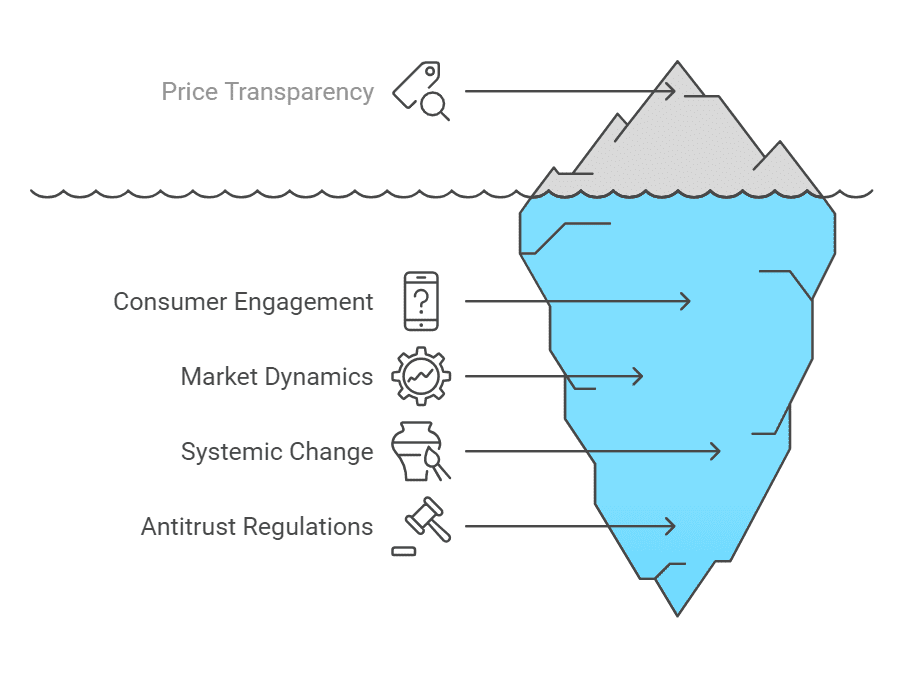
Even when transparency tools are available, consumers often fail to use them effectively. For instance, a study by JAMA found that only 11% of employees offered price transparency tools utilized them, limiting their impact (JAMA, 2016, source).
Potential Fix: Simplify tools and integrate them with provider platforms to make them more intuitive and accessible. Educational campaigns could also increase awareness and usage.
In highly consolidated markets, transparency alone has limited impact. Dominant providers may maintain high prices due to a lack of competition, even with transparent pricing.
Potential Fix: Enforce antitrust regulations to prevent excessive consolidation and foster competition. Additionally, incentivizing new market entrants could create more options for patients.
Competition and price transparency are essential levers for transforming the U.S. healthcare system. By empowering consumers, holding providers accountable, and fostering efficient markets, these strategies can reduce costs and improve quality. Evidence from domestic initiatives and international examples underscores their potential. However, overcoming challenges will require sustained commitment from policymakers, providers, and consumers.
Transparent pricing and healthy competition are not panaceas but are critical components of a broader strategy to create a more equitable and efficient healthcare system. As more stakeholders recognize their value, these principles could drive the systemic change that American healthcare costs urgently needs.
Recent Posts

March 1, 2026


February 25, 2026

February 21, 2026

February 15, 2026

February 8, 2026

February 4, 2026
Get In Touch— We’re available 24/7
"*" indicates required fields
“We respect your privacy. Your contact information will be used solely for the purpose of responding to your inquiry and will not be shared with third parties.”
Click To Open Modal
Get In Touch— We’re available 24/7
"*" indicates required fields
“We respect your privacy. Your contact information will be used solely for the purpose of responding to your inquiry and will not be shared with third parties.”
Thanks!
We will be in touch soon.
If you're looking to book a consultation now
Affordable health and benefits plans for small businesses, freelancers, and independent contractors.



Copyright © 2026. Peo4you. All rights reserved.