

Efforts to lower healthcare costs, such as reducing Medicare-associated expenses or capping drug prices, are often met with praise. However, these actions can sometimes create unintended ripple effects, such as increased costs for the under-65 market or other medications. This article explores the evidence supporting and contradicting this cost-shifting phenomenon, evaluates its implications, and offers alternative solutions to reduce healthcare expenses without causing unintended economic consequences.
Cost-shifting occurs when healthcare providers or drug manufacturers compensate for lost revenue in one area by increasing prices in another. For example:
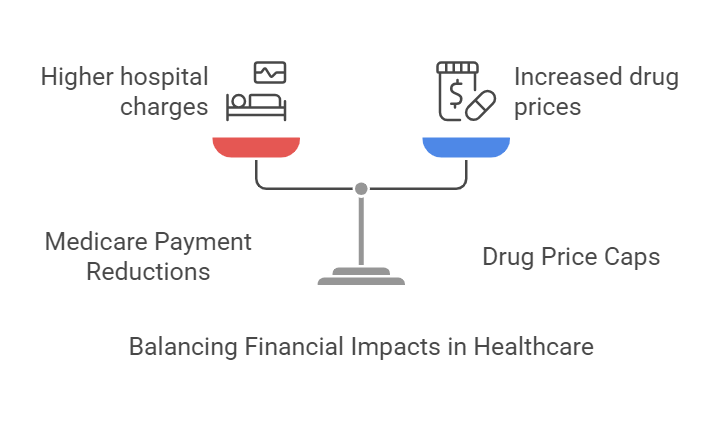
When Medicare reduces reimbursement rates, hospitals may charge higher prices to private insurers to offset losses. This practice helps hospitals maintain financial stability, as the average profit margin for hospitals in the U.S. hovers around 8% according to the American Hospital Association (AHA, 2021). Without such adjustments, hospitals risk operating at a loss, potentially leading to closures or reduced services.
Caps on the cost of certain medications may lead manufacturers to increase prices for other drugs or in other markets. Pharmaceutical companies often cite the need to recover significant research and development costs, which can exceed $2.6 billion per drug on average (Tufts Center for the Study of Drug Development, 2020). Without these price adjustments, companies may struggle to fund new innovations or face financial instability.
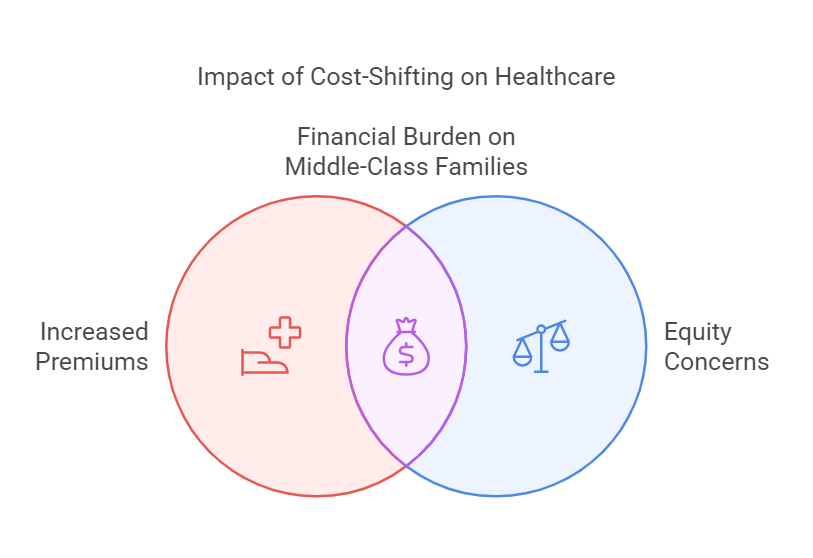
Cost-shifting leads to higher premiums for the under-65 population, eroding affordability for middle-class families.
Higher prices in non-regulated markets may discourage investment in innovative drug development due to reduced affordability and market access.
Cost-shifting exacerbates disparities, as those with private insurance bear a disproportionate financial burden compared to beneficiaries of public programs.
To avoid the pitfalls of cost-shifting, policymakers and stakeholders can consider the following strategies:
Transparency initiatives, such as requiring hospitals and drug manufacturers to disclose pricing, empower consumers and insurers to make informed decisions.
Shifting from fee-for-service models to value-based care aligns provider incentives with patient outcomes, reducing overall costs.
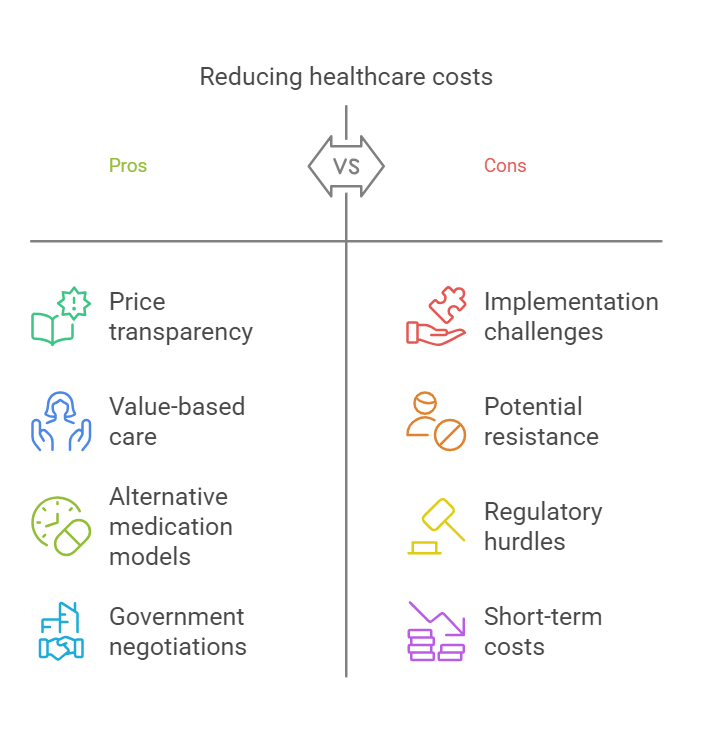
Allowing Medicare to negotiate drug prices directly with manufacturers can reduce costs without shifting the burden to private payers.
Insurers, hospitals, and pharmaceutical companies may resist transparency or value-based models due to potential revenue losses.
Complex state and federal regulations often hinder the adoption of innovative pricing and care delivery models.
Transitioning to value-based care or transparent pricing requires significant investment in infrastructure and technology.
Reducing Medicare-associated costs or capping drug prices can inadvertently lead to cost-shifting, increasing financial burdens on other markets or populations. While evidence suggests this phenomenon is real, it is not inevitable. By adopting alternative strategies like price transparency, value-based care, and innovative drug pricing models, the healthcare system can reduce costs sustainably without creating new inequities.
The path forward requires collaboration among policymakers, healthcare providers, and private stakeholders. With the right mix of solutions, the U.S. can achieve a healthcare system that prioritizes affordability, equity, and innovation.
Recent Posts

March 1, 2026


February 25, 2026

February 21, 2026

February 15, 2026

February 8, 2026

February 4, 2026
Get In Touch— We’re available 24/7
"*" indicates required fields
“We respect your privacy. Your contact information will be used solely for the purpose of responding to your inquiry and will not be shared with third parties.”
Click To Open Modal
Get In Touch— We’re available 24/7
"*" indicates required fields
“We respect your privacy. Your contact information will be used solely for the purpose of responding to your inquiry and will not be shared with third parties.”
Thanks!
We will be in touch soon.
If you're looking to book a consultation now
Affordable health and benefits plans for small businesses, freelancers, and independent contractors.



Copyright © 2026. Peo4you. All rights reserved.