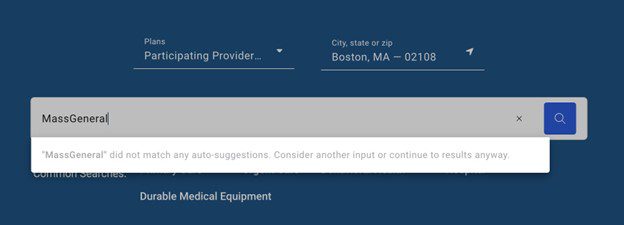

The fear is always the same: "If I switch plans, my employees will lose their doctors." It's the #1 reason employers stay locked into overpriced coverage — and carriers know it. Our solutions are specifically designed to break that trap. We find structures that deliver meaningful savings while preserving or expanding the provider networks your employees depend on.
See How It Works ↓Here are the 4 in which we specialize and why 70% of clients who request a quote say yes
Union-backed health plan offering Gold-level benefits at below-market rates. Non-experience-rated premiums mean your company's claims history never drives your costs up. Historically stable 2-3% annual renewals protect your P&L from volatility — a major selling point during due diligence.
Access Fortune 500-level benefits through a co-employment model. Flat per-employee pricing replaces unpredictable percentage-of-payroll models. Bundled HR, payroll, compliance, and workers' comp simplify operations and reduce the administrative overhead buyers scrutinize.
Take control of your claims data with transparent funding models. Captive and group captive options can yield 20-35% savings over fully covered plans. Ideal for companies with 50+ employees seeking long-term cost predictability with upside potential.
The standard model most businesses start with. Guaranteed rates for 12 months, but subject to annual renewals that can spike 10-25%+ based on your group's claims. Limited plan design flexibility and no claims data transparency.
PEO4YOU is a Taft Hartley plan. Taft Hartley plans pull businesses and sole proprietors together in order to improve rates through shared risk pooling. The money people pay for their health coverage goes into a trust and is regulated by ERISA laws. This requires that money in the fund only go out for medical claims and administration - not for executive profits. The main advantage of this plan is its premium stability where every business gets the same premium increases whether they are healthy or sick. Many clients report smoother claims administration and an enhanced customer service experience. Some clients have saved over 50% on their health premiums.
PEOs are a total business solution that help assist in 5 areas - payroll, HR, compliance, employee benefits, and (sometimes) workers' compensation - which typically helps them outcompete comparable businesses not in a PEO. Due to their structure, they provide unmatched compliance risk management that cannot be duplicated outside of a PEO. For many businesses, they also provide unbeatable health rates and voluntary Fortune 500 employee benefits options without enrollment and participation requirements. Our recommended PEO partners all have client retention rates between 91.8-95% and do not interfere with how ownership wants to run their business. Some clients have saved as much as 52% on their medical through PEOs.
Over the last decade, the popularity of self-funded plans has grown significantly as fully insured rates have skyrocketed. For businesses considered small groups, self funded options allow businesses to be rewarded with lower health-based rates that tend to be lower than fully-insured options. What makes these plans so effective is their customizability. Employers can choose their own TPA, pharmacy benefit manager, specialty med carveouts, direct primary care, etc. This level of customization can slash annual premiums with typical savings of 10-30%. 50% of employers with 20+ employees enrolled can expect savings of at least 25%.
For small groups, fully insured options are based simply on zip code and date of birth. As a result of not being able to determine rates in any other way, the carrier has to assume below average health. This tends to make fully insured advantageous for unhealthy groups. For large groups (ie 50+ FTEs), rates are still health-based. That said, unlike self funded plans, claims data tends to be not shared at all or highly delayed. The advantage for large groups is that the network and claims administrator are the same.
Company Profile: A 13-person mortgage lending company based in Massachusetts, in rapid growth mode with plans to scale to 100 loan officers by end of 2026 and 300-500 by end of 2027. The company was on a high-cost fully covered plan through a benefits administrator that was failing on both service and cost — but the owner was terrified that switching would mean losing provider access or downgrading plan quality for employees.
Assessment: The company's current $829/month individual rate was significantly above market. Shopping to another carrier could yield 10-15% savings — roughly $6,600-$10,000/year.
Limitations: Does not solve the service problem, enrollment portal issue, or scaling challenge. Network change risk remains (different carrier = different network).
✗ Reduces cost modestly but solves only one of five problemsProjected savings: Significant — the plan's non-experience-rated BCBS PPO would likely produce 15-25% savings vs. the current plan, with superior benefits (lower deductibles, lower OOP max).
Limitations: Does not include payroll, onboarding platform, or compliance management. For a company scaling to 100+ employees rapidly, the administrative gaps would need to be filled by a separate HR provider.
◐ Strong cost/quality option, but doesn't address growth-stage operational needsAssessment: At 13 employees, the group is far too small for self-funding. A single high-cost claimant would create catastrophic volatility.
✗ Not viable at current headcount — revisit at 75-100+ employeesAnnual premium cost: ~$44,000/year (EPO 2000 via major national PPO network)
Previous annual premium cost: ~$66,624/year (regional PPO/HSA)
Annual savings on premiums alone: ~$22,624/year (34% reduction)
PEO admin fee: ~$1,000/year per employee (~$13,000/year total)
Net annual savings after admin fees: ~$9,600/year — growing significantly as headcount scales
$7,500 termination fee recovery: Recouped within ~4 months of premium savings
| Metric | Before (Regional PPO) | After (National PPO via PEO) |
|---|---|---|
| Network size | ~600K providers (regional) | 1.5M+ providers (nationwide) |
| Geographic coverage | Primarily New England | All 50 states |
| Plan type | PPO (via HSA) | EPO 2000 / PPO 1000 / PPO 500 (employee choice) |
| Individual deductible | $5,000 | $2,000 (EPO) / $1,000 (PPO 500) |
| Specialist access | In-network only | Nationwide in-network |
| Enrollment | Manual paper-based | Online portal with SSO |
| Benefits support | Routed back to employer | Dedicated coordinator (single point of contact) |
Based on the current plan's trajectory of 8-10% average annual increases vs. PEO premiums capped at 3% maximum annual increases.
At projected 100 employees: 6-year savings scale to $1.5M+
Plan options offered to employees:
The owner's decision came down to a single question: "Can I give my employees better coverage for less money — without anyone losing their doctor?" The answer was an unambiguous yes.
The network upgrade eliminated the fear. The switch from a regional network (~600K providers) to a national network (1.5M+ providers, nationwide) didn't just preserve existing provider relationships — it dramatically expanded them. For a company about to hire across multiple states, national network coverage wasn't just nice-to-have; it was essential infrastructure.
The cost reduction was immediate and structural. The $22,624 annual premium savings wasn't achieved by downgrading to a bare-bones plan. The EPO 2000 offered a $2,000 deductible (vs. the previous $5,000), broader network access, and online enrollment — all at 34% lower cost. The savings came from large-group purchasing power, not from benefit reduction.
The $7,500 termination fee was a non-issue. At ~$1,885/month in premium savings, the fee was recovered in under 4 months — the cost of escaping a bad relationship.
The service model solved the real pain point. Moving from a non-functional portal and unresponsive administrator to a dedicated benefits coordinator, online enrollment platform, and proactive compliance management eliminated the operational drag that was slowing the company's hiring machine.
The cost structure shift was strategic. The old model combined a low admin fee with high, volatile premiums. The PEO flipped this: a slightly higher admin fee paired with lower, stable premiums capped at 3% maximum annual increases. This transformed a volatile expense into a predictable, budgetable line item — critical for a company building financial projections for rapid scaling.
EPLI protection was an unexpected bonus. Included in the admin fee was Employment Practices Liability coverage — a meaningful benefit for a fast-growing company in the financial services industry, where EPLI claim probability runs at 14%. With average defense costs of $35,000-$70,000 and average settlements of $40,000, the included coverage represented significant risk mitigation at no additional cost.
The long-term strategy: Start with the PEO to solve immediate cost, service, and scaling needs. As the company grows toward 100+ employees, evaluate transitioning to a self-funded captive model for even greater cost control and claims data transparency.
Use our free Benefits Package ROI Calculator to compare your current costs against PEO4YOU alternatives. Input your group size, current premiums, and plan details to get a personalized savings estimate — without losing network quality.
Try the Benefits ROI Calculator →Talk to an advisor who will walk you through your options — no pressure, no obligation. Just the numbers and the plan that fits your business.
857-255-9394 [email protected]Affordable health and benefits plans for small businesses, freelancers, and independent contractors.


Copyright © 2026. Peo4you. All rights reserved.